Showing posts with label Tablets. Show all posts

Wednesday, October 1, 2014

Microsoft announces the biggest version of Windows ever, Windows 10

After months of anticipation surrounding the follow-up to Windows 8.1, Microsoft decided to jump and unveil Windows 10 at San Francisco. Scheduled to be released in 2015, Windows 10 brings a wealth of desktop-friendly features while promising a unified experience across smartphones, tablets, PCs and TVs. Microsoft teased the possibility of a more unified Windows earlier in the year, and Windows 10 seems to deliver on that promise by offering an app marketplace in which applications can be bought and updated across smartphones, laptops and tablets all at once. Windows 10 also has its eyes on the enterprise user, offering the ability to easily separate personal and business data.

Now, putting the main thing into limelight: Windows 10 itself
The return of the Start Menu

Windows 10 will mark the long-awaited return of the START MENU. No, this is not the Start Screen you saw in Windows 8 & 8.1... This is the Start Menu. But ofcourse, Windows 7 was released in 2009 and the world has seen great improvment in software designs, and Microsoft didn't just bring back the ageing Aero based Start Menu we saw in Windows 7.  The Windows 10 Start menu combines Windows 7's convenient column of app icons with a sidebar for Windows 8's refreshing, touch-friendly Live Tiles. There's also a "Me" tile at the top of the Start menu that displays whichever user is logged in (just like Windows Phone)


Multitasking


Multitaskers can look forward to Windows 10's new Task View feature, which lets you get a quick glance at all of your open apps in the vein of Mission Control in Apple OS X. The software will let you switch between multiple desktops just like the Workspaces in various Linux distributions, with a Snap Assist feature that lets you easily swap in apps from any of those open desktops. You'll also be able to snap up to four apps on the same screen. In another upgrade for power users, Windows 10 has beefed up the command prompt function, which now lets you paste directories directly using the Ctrl+V command.


Continuum  


Microsoft showed Windows 10's new continuum feature, which is designed to automatically alter the OS when you switch modes on a 2-in-1, such as the Surface Pro 3. For example, clicking the Start button with a mouse and keyboard attached will open the classic-style desktop Start menu, while doing the same in tablet mode will bring up the Windows 8-style full-screen Start menu with large Live Tile icons.

Tuesday, May 27, 2014

The Operating System


About the Operating System
The Operating system is a fundamental software of a computer, controlling all basic operations of the computer  The Operating System is the base on which the user installs and executes third-party applications (commonly called apps for short) usually adding extended functionality to the device.
Among the most popular computer operating systems are Microsoft's Windows and Windows Phone and Apple's Mac OS and iOS, Google's Android and Chrome OS and the various distributions of Linux kernal.


Among the most popular OS's for mobile devices are Apple's iOS and Google's Android and they are the only ones that still show growth. Down the ranks there are RIM's BlackBerry OS and Microsoft's Windows Phone. Symbian holds a distant place, when merely 5 years ago it was still the most widely used mobile OS.
Symbian held its top position for years but its market share has been slowly fading away ever since touch-operated smartphones became the norm and Symbian failed to deliver an intuitive touch UI. Almost ten years ago, Microsoft's Windows Mobile was a strong player too, offering the first touchscreen smartphone experience with the PocketPCs powered by their OS.
Today mobile devices with a proper OS are called smartphones and users have a wide choice of applications, such as games, productivity apps, communication or social media apps, digital maps, etc.
Standardized operating system platforms make it possible to provide a consistent user interface (and experience) across devices from different hardware manufacturers. Yet, Android smartphone manufacturers like to customize the user experience so each offers a slightly modified version of the stock Android UI.
While the major players these days are clear, over the years we've seen the emergence of numerous mobile OS projects including but not limited to LG's webOS, Tizen, BlackBerry's Playbook OS and more recently, the Jolla's Sailfish OS and Mozilla's Firefox OS.

Choosing the right operating system
Choosing the right OS is very important. It will decide the way you use your smartphone.

 1. Now, if you're the one who will walk into the store, buy a smartphone and use what's provided out of the box, Apple's iOS will suit you. iOS gained popularity for its simple and elegant user interface. The home screen (as simple as it can get) is a grid of horizontally scrollable app icons with a dock in the bottom to pin your frequently used apps. Also, if you own a Mac or you use iTunes, iOS will be perfect for you.
2. But, on the other hand, if you're the person who wants to personalize your phone to the fullest, have access to the widest range of applications or maybe you want a mobile device for development purposes, Google's Android will suit you. It offers customization that is second to none! It offers you with the widest range of devices with the most powerful hardware you can think of. It also gives importance to the user's choice. Don't like the way your homescreen looks? No problem! Just download a replacement from the Google Play Store. And it's not only about the home screen! It's about almost everything in the system software! Also, if you are a heavy Gmail user, your business uses Google Apps, you're into YouTube(ing) or you prefer Google Play Music/Movies/Newsstand/Keep, go for Android..... you won't regret it.


3. If you are more of the Microsoft guy, with your work email on Microsoft Exchange or you want stellar productivity of Microsoft Office on the go or if you simply love Microsoft's Modern User Interface, go for Microsoft Windows Phone. It's the most elegant & fluid operating system. Sporting a homescreen of vertically scrollable Live Tiles which are simply boxy icons which dynamically update on the go to provide you with live information. 

This is the second installation in the Inside your smartphone series. The first part about the Processor is right here.


Tuesday, April 29, 2014

CamerasNow: Samsung launches the camera centric KitKat running Galaxy K zoom smartphone-camera hybrid


Samsung has officially announced the Galaxy K zoom camera phone, a successor to the Galaxy S4 zoom launched last year. Not unlike its predecessor, the Galaxy K zoom combines a front face regular smartphone with the hardware of a point and shoot camera slammed on the back


Speaking about the camera, the Galaxy K zoom has an optically stabilized (OIS) 20.7 megapixel 1/2.3 BSI CMOS sensor and a 10x, 24-240mm F3.1-6.3 zoom lens. The phone has a xenon flash with an LED autofocus assist. On the front is a relatively humble 2 megapixel camera.

Coming back on the front smartphone side of the hybrid, the Galaxy K zoom has a 4.8-inch, 1280x720 HD Super AMOLED display, Exynos 5 Hexa SoC with four Cortex A7 @ 1.3GHz and two Cortex A15 @ 1.7GHz, along with a Mali-T624 for graphics, 2GB RAM, 8GB internal memory with microSD support up to 64GB,4G LTE, Bluetooth 4.0, Wi-Fi 802.11 a/b/g/n, NFC, 2,430mAh battery and Android 4.4 KitKat.
The Galaxy K zoom will be available in May in black, white and blue for €499 (Rs. 41881)

Friday, April 25, 2014

TechNow: Nokia-Microsoft deal now officially done... Nokia now Microsoft Mobiles


It's done – Nokia has just announced the completion of the sale to Microsoft of "substantially" all of its Devices & Services business to Microsoft. "Substantially" since two factories were excluded from the deal – the Chennai factory in India, but also the Masan factory in South Korea.

The deal underwent other changes too – the final price is expected to be slightly higher than the initially announced €5.44 billion due to a positive adjustment in net working capital and cash earnings. The leadership team that led Devices & Services at Nokia has stepped down and is moving to Microsoft effective today. This includes former CEO Stephen Elop, Jo Harlow, Juha Putkiranta, Timo Toikkanen and Chis Weber.

Nokia will make another announcement on April 29 (next Tuesday) to provide further details of the transaction (presumably the fate of the Chennai factory and the final sales price).

You can read Stephen Elop's open letter here. On Monday, Elop will be answering questions at the Nokia Conversations blog.

Let's play the iconic Nokia Tune one more time as we close this large chapter in mobile history.

Source

UPDATE:
Images from Harri Kiljander (Director of F-Secure Lokki) show what appears to be Nokia House in Finland with a crane truck up front, preparing to take down Nokia’s logo and another photo showing the S and F from Microsoft’s logo, reportedly being prepared for mounting. The “On The Move” sign under the Nokia logo adds an air of irony to the otherwise saddening image.

In the aftermath of the deal Microsoft will acquire around 32 thousand employees (around 4 thousand of which in Finland and around 18 thousand directly connected to manufacturing), a 10-year non-exclusive license of Nokia’s patent portfolio and a robust devices business while Nokia walks away with the ripe sum of €5.44 billion.

Hopefully Microsoft, as biggest manufacturer of Windows Phones starting today, will not let down the millions of Nokia owners and fans and will continue to innovate as Nokia did.

Source

TechNow:Sony brings Lifelog, SmartBand fitness apps to non-Sony Androids


More smartphone users are trying out fitness trackers every day, and while there are a lot of options out there, all too often we’re limited in what’s accessible to us based on what phone we’re carrying. Sony, for instance, introduced its SmartBand tracker back at CES, and while it was both a more flexible and affordable option than some of its competition, so far its usage has been constrained to Sony Xperia models. This week that changes, as Sony updates both its Lifelog app and the SmartBand SWR10 app itself to support non-Sony Androids.


The SmartBand SWR10 app lets you configure the band and set up how it interacts with your phone, while Lifelog is the one that takes sensor data from not just the SmartBand but your phone as well and uses it to help you monitor your activity level and chart progress towards fitness goals.

While on Sony Xperia models, Lifelog still requires a connection to your Sony Entertainment Network account, non-Sony users can log in with their Google credentials.

Not every Android will work with the apps, though, and right now compatibility is limited to Android 4.4 devices supporting Bluetooth 4.0 LE; but just as we saw this most recent update bring support to non-Sony models, future builds may just dial back that Android version requirement, as well.

Sources: 1| 2| 3

TechNow: An updated Dialer app for Android 4.4.3 leaks


Google’s in the midst of preparing for a wide-reaching overhaul of its Android apps, and a number of disparate leaks have revealed the same sort of UI changes: flat design, circular icons, and bold color. We shared with you the latest development along these lines earlier this week, after it was discovered that Google itself shared a screengrab from such an updated version of its Android dialer app. Today we’re back to take a second look, with a new screenshot appearing to reveal even more of the dialer’s new makeover.

There might not be any of those circular icons here, but the design is unmistakably Google’s, with a shift to a card-based interface. It’s not entirely clear who the original source is behind these shots, posted to the XDA-Developers forums by a user claiming to be a friend of the phone’s owner, but speculation based on the contacts in the dialer suggest he has close ties to Google.

We’ve also seen some questions raised about the validity of these shots, not helped by the poster’s habit of insulating us from the originals by taking screenshots of existing screenshots, so it’s worth treating this find with a healthy amount of skepticism. Still, it’s enough in line with the type of things we’ve been seeing lately that it rings true enough to our eyes.

Supposedly, this new dialer (and maybe the rest of those app refreshes) would debut alongside the release of Android 4.4.3.

Source

Thursday, April 24, 2014

TechNow: AdDuplex claims Windows Phone 8.1 runs on 3.1% of all WP devices after three days of availability


It appears that Microsoft Windows Phone 8.1 is hotter beyond anyone’s expectations. Only three days after going live, the developer version of the newly-launched OS runs on 3.1% of all WP devices.

The data you see above comes from AdDuplex – the largest cross promotion network for both WP and Windows 8 apps. It was collected over the day on April 17 (the developer version of WP 8.1 was launched on April 14).


The rapid rise in market share of the newly-launched OS means that in addition to the members of the Windows Phone developer community, a great deal of enthusiasts have gotten their hands on the OS (obtaining a WP developer status is free and you can do it over here).

It will be a few months before Windows Phone 8.1 is officially available as an update. The first smartphones to run the OS, Nokia Lumia 630/635 and Lumia 930 will arrive in May and June respectively.

Windows Phone 8.1 brings a great deal of new features to the platform. They include the digital personal assistant Cortana, Action center, updated UI with custom lockscreen and tile backgrounds, IE 11, etc. You can find out all about the OS in our detailed article.

Source

TechNow: Galaxy S5 outsells iPhone 5s over launch weekend


The Samsung Galaxy S5 scored more sales in its launch weekend than the iPhone 5s in its respective period. More specifically, the Galaxy S5 snug 25% and 18% of the smartphone market share in the USA and Canada for that period. The iPhone 5s did slightly worse at 18% market share in the US and 13% in Canada.

The interesting statistics come from company iQmetrix, which specializes in retail management software for the wireless industry in the US and Canada. It collected data from over 15,000 stores and compares the launch weekends of the two rivals - September 20-22, 2013 for the iPhone 5s and April 11-13 for the Galaxy S5.

A more detailed analysis reveals that the Galaxy S5 did best in the Southern US region, where from Aprill 11-13 the phone accounted for 41% of the overall phone sales. In the Northeast that number is 30%, 23% in the Midwest and 21% in the West.

iQmetrix also provided data of the 6-month lead-up period before the two flagships hit the market. From May 2013 to October 2013 the iPhone 5 sales dropped progressively as customers patiently awaited the iPhone 5s announcement. Interestingly, that's not the case for the Galaxy S4 (October 2013 to March 2014), which saw a boost in sales thanks to the Holiday shopping season.

Check out the full infographic by clicking the image below.
Close window Source

TechNow: Motorola commits to future phones running near-stock Android

Plenty of smartphone companies are looking to reinvent UI, but the one that really stands out in our mind as the most recent success story at doing just that has got to be Motorola. A year ago, Motorola smartphones were uninspiring at best, didn't see great availability, and suffered from mediocre software support. Maybe it’s because of that Google influence trickling down, but once summer rolled around and the Moto X neared its chance to debut, the story really started changing: Motorola started targeting whole different buyer groups, putting out really high quality yet still eminently affordable hardware, while delivering a near-stock-Android software experience that got software updates at a pace second only to Nexus models themselves. But now Motorola is changing hands yet again, with Lenovo about to be in charge. We've already about how Lenovo intends to keep the brand alive, and use it to reach Western audiences, but what will this shift mean for the smartphones themselves? In a recent Hangout, Motorola VP of Software Punit Soni answered some questions about what’s next for the company.

The good news: we can look forward to the same pretty-much-stock Android experience we get today from the Moto X and Moto G. Motorola likes the response it’s gotten from what it’s doing with those two phones, and wants to the keep same routine going with its next-gen handsets. And while we don’t get to talking about specific hardware components, Soni mentions that camera performance is a big concern for Motorola, and that going forward we should expect to not just see image quality improved, but the camera experience as well. Whether that’s just talking about the camera UI, or something along the lines of effects processing (like all that bokeh that’s everywhere right now), either way sounds good to us.

Source

TechNow: Leaks show a 7' Samsung smartphone!


Smartphone screens keep getting growing in size, creating a new segment of devices called the Phablets. Phablets push the boundaries of pocket-friendliness, but now Samsung is looking to create a 7” handset to usher humanity into an era of ridiculously sized mobile screens.

Meet the Samsung SM-T2558, the cell phone with the largest display size to date.
The monstrous handset was spotted on the Chinese site TENAA, which delineates certification approvals for cell phones and various other consumer tech products (Take it as China's FCC).
The rumour has it that the tablet-with-phone-capabilities will be part of the Galaxy family, and will be named the Galaxy Mega 7.0. Specifications point of view, it doesn't pack anything eye-popping: a 1.2GHz quad-core processor (mostly a Snapdragon 400 Cortex A7) with 1.5GB RAM, 8MP primary and 2MP front-facing camera, Android 4.3 Jelly Bean, and 8GB of internal storage with a microSD card slot. It’ll also connect to Chinese 3G/4G networks: TD-SCDMA and TD-LTE.

Wednesday, April 23, 2014

TechNow: Samsung Galaxy Tab 4 series will be available in the US from May 1

Samsung officially unveiled its new thinner and lighter Galaxy Tab 4 series earlier this month. The lineup consists of three devices – Galaxy Tab 4 7.0, Galaxy Tab 4 8.0 and Galaxy Tab 4 10.1 and now the company has confirmed that they all will be available in the US on May 1, with the pre-orders starting tomorrow.
The Samsung Galaxy Tab 4 series will be up for grabs in black or white versions. The slates will be available for purchase from quite a few major retailers across the United States – the pre-orders are accepted at Samsung’s online store, Amazon, Best Buy, Fry’s, Office Depot, OfficeMax, PC Richard and Son, Sears and Tiger Direct.
AT&T will offer the 4G LTE versions of all the three Galaxy Tab 4 slates on sale this summer, while Sprint will offer only the 4G LTE variant of the Galaxy Tab 4 7.0. T-Mobile will have the 4G LTE Galaxy Tab 4 8.0 on sale and Verizon will get the 4G LTE Galaxy Tab 8.0 and 10.1. The Wi-Fi enabled Galaxy Tab 4 7.0, 8.0 and 10.1 will cost $200, $270 and $350 respectively. 

TechNow: WhatsApp reaches 500 million users

Popular IM service WhatsApp has reached the 500 million users milestone. And it’s not just the total number of users the service has but active users who use the service regularly.
This comes shortly after the company was acquired by Facebook, although WhatsApp had a healthy 450 million users at the time of acquisition. The majority of the growth comes from countries like Brazil, India, Mexico, and Russia, with India alone having 48 million WhatsApp users.
One of the reason the service is so popular in developing nations is sheer number of platforms the service is available on, which includes iOS, Android, Windows Phone, BlackBerry, Symbian and S40, unlike many other services that are only available on iOS and Android.
The service has remained unaltered since the Facebook acquisition and is expected to remain that way.

Source

TechNow: Google Play Store having a Premium Game Sale


If you haven’t scratch your “good deal” itch with Steam Sales, Google is holding a Premium Game Sale. The sale features paid games exclusively, ranging for casual to highly advanced. This includes Anomaly 2 (down to just $0.99), The Dark Knight Rises, Need for Speed: Most Wanted and so on. Note that the available games and the list their price varies by region. Regardless of where you are, this link will take you to Google Play Store’s Spring Sale.

TechNow: Samsung looking to get app developers interested in the newest Gear smartwatches

Samsung is kicking its series of Smart App Challenges with a smartwatch-centric one called the Gear App Challenge.


As its name suggests, Samsung wants developers to create great apps for its Gear 2 and Gear 2 Neo smartwatches. In return, the company is ready to give away $1.25 million in cash and goodies for the best ideas and developers!

The Gear App Challenge kicks off May 8 and registering is simple. The company hasn’t announced much more details beyond this, but it’s expected to do so in the coming week or so.

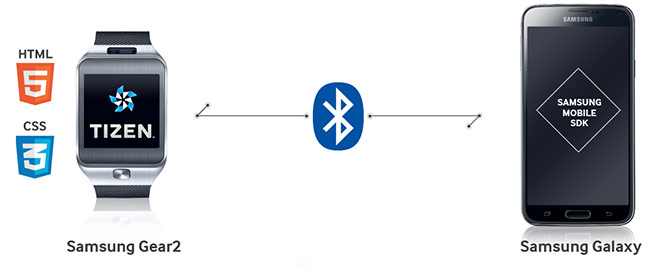
If you know your way around an .html and .css file, head over to the source link below to give the Samsung Gear Dev Tool and the available SDKs a go.

TechNow: Google will pay for some of Samsung’s damages if Apple wins the trial.


We had recently heard that Samsung would ask Google for some help in sending some of its founding Android engineers to take part in the Apple vs. Samsung trial, to which Google agreed. It’s only fair that Google participated in helping Samsung fix these issues since some of these patent claims have mainly to do with Android, and not necessarily TouchWiz. What we didn’t know is that Google had also decided to do more than just participate in the trial with its employees.

It’s pretty much confirmed that Google will be paying for some of Samsung’s damages in case Apple wins the patent trial that both companies are facing. This would apply in case Apple defeats Samsung in two specific patents, numbers 414 and 959, which cover background synchronization and universal search respectively, features which are available on every Android phone today. Google’s lawyer James Maccoun also revealed that the additional reasons why Google will support Samsung monetarily if necessary, is because of the agreement signed between both companies in order to allow for Google Apps to run on Samsung smartphones running Android.

Hopefully this patent trial will lead to a happy ending, as Apple is seeking more than just a flat fee for its patent litigation. Apple wants around $40 for every Samsung smartphone built, which would definitely mean more than just one check to be written between Samsung/Google and Apple.

Source

Saturday, April 19, 2014

TechNow: The next iPad to sport a display joined to the digitizer, says leaks.

What could we hope to see from Apple’s next full-sized iPad: Layout-wise, the front panel you see here doesn’t appear to differ much from the current iPad Air: same thin side bezels, and home button placement. This is virtually identical to the first generation iPad Air, you might say.....

But, unlike the current iPad Air which has its LCD panel separate from its front glass/digitizer, this appears to be an all-in-one construction. While not by much, that consolidation could free up precious sub-millimeters within the tablet’s body, creating either much more room to cram in a larger battery, or simply make the tablet itself a little thinner.

Source

Friday, April 18, 2014

TechNow: Apple to introduce its own music identification service with Shazam


The popularity of services like Shazam and SoundHound have proven to be quite substantial lately. To even consider it possible for your smartphone to detect a song that’s playing on the radio a decade ago was a dream. Today however, we see services like Bing being able to detect songs natively without the need of a third-party app, and it seems Apple wants to follow these footsteps.

Bloomberg reports that Apple plans to bring song identification to iOS 8, and apparently the company will use Shazam to get the job done. The report mentions that:


“The company is planning to unveil a song-discovery feature in an update of its iOS mobile software that will let users identify a song and its artist using an iPhone or iPad, said two people with knowledge of the product, who asked not to be identified because the feature isn’t public. Apple is partnering with Shazam Entertainment Ltd., whose technology can quickly spot what’s playing by collecting sound from a phone’s microphone and matching it against a song database.
The song-identification feature will be integrated into the mobile software in the same way that Twitter’s service is currently incorporated, meaning consumers don’t need to separately download it. Among the ways it can be used will be through Apple’s voice-activated search feature, Siri. An iPhone user will be able to say something like “what song is playing,” to find out the tune’s details, one person said.”

We should expect these changes to happen with iOS 8 in Apple’s WWDC event in June. Some of us sadly prefer SoundHound’s capabilities and features when compared to Shazam, but we’re sure there are some of you who disagree. Let’s hope the service “just works” as Apple always intends things to do so, and not always succeeds.

Bloomberg

TechNow: Motorola discounting their accessories to upto 30%


Motorola is offering 30% off “most” accessories. All you need to do is enter coupon code “SPRING30” into your shopping cart to see the savings. While it does indeed work, we take a little issue with Motorola’s description of this code being valid for most accessories, as the half dozen we tried it out with found the code to not work more often than not – it seemed to work fine for cases and Bluetooth headsets, but not cool stuff like Chromecast, Skip, or higher-end earphones. Be sure and verify that the code’s working on the accessories you have in mind before submitting your order.

Learn more about Apple also doing the same with their tablet iPad Mini 2 right here on TheEverythingNow!