Showing posts with label Wearables. Show all posts

Wednesday, October 1, 2014

Microsoft announces the biggest version of Windows ever, Windows 10

After months of anticipation surrounding the follow-up to Windows 8.1, Microsoft decided to jump and unveil Windows 10 at San Francisco. Scheduled to be released in 2015, Windows 10 brings a wealth of desktop-friendly features while promising a unified experience across smartphones, tablets, PCs and TVs. Microsoft teased the possibility of a more unified Windows earlier in the year, and Windows 10 seems to deliver on that promise by offering an app marketplace in which applications can be bought and updated across smartphones, laptops and tablets all at once. Windows 10 also has its eyes on the enterprise user, offering the ability to easily separate personal and business data.

Now, putting the main thing into limelight: Windows 10 itself
The return of the Start Menu

Windows 10 will mark the long-awaited return of the START MENU. No, this is not the Start Screen you saw in Windows 8 & 8.1... This is the Start Menu. But ofcourse, Windows 7 was released in 2009 and the world has seen great improvment in software designs, and Microsoft didn't just bring back the ageing Aero based Start Menu we saw in Windows 7.  The Windows 10 Start menu combines Windows 7's convenient column of app icons with a sidebar for Windows 8's refreshing, touch-friendly Live Tiles. There's also a "Me" tile at the top of the Start menu that displays whichever user is logged in (just like Windows Phone)


Multitasking


Multitaskers can look forward to Windows 10's new Task View feature, which lets you get a quick glance at all of your open apps in the vein of Mission Control in Apple OS X. The software will let you switch between multiple desktops just like the Workspaces in various Linux distributions, with a Snap Assist feature that lets you easily swap in apps from any of those open desktops. You'll also be able to snap up to four apps on the same screen. In another upgrade for power users, Windows 10 has beefed up the command prompt function, which now lets you paste directories directly using the Ctrl+V command.


Continuum  


Microsoft showed Windows 10's new continuum feature, which is designed to automatically alter the OS when you switch modes on a 2-in-1, such as the Surface Pro 3. For example, clicking the Start button with a mouse and keyboard attached will open the classic-style desktop Start menu, while doing the same in tablet mode will bring up the Windows 8-style full-screen Start menu with large Live Tile icons.

Friday, April 25, 2014

TechNow: Nokia-Microsoft deal now officially done... Nokia now Microsoft Mobiles


It's done – Nokia has just announced the completion of the sale to Microsoft of "substantially" all of its Devices & Services business to Microsoft. "Substantially" since two factories were excluded from the deal – the Chennai factory in India, but also the Masan factory in South Korea.

The deal underwent other changes too – the final price is expected to be slightly higher than the initially announced €5.44 billion due to a positive adjustment in net working capital and cash earnings. The leadership team that led Devices & Services at Nokia has stepped down and is moving to Microsoft effective today. This includes former CEO Stephen Elop, Jo Harlow, Juha Putkiranta, Timo Toikkanen and Chis Weber.

Nokia will make another announcement on April 29 (next Tuesday) to provide further details of the transaction (presumably the fate of the Chennai factory and the final sales price).

You can read Stephen Elop's open letter here. On Monday, Elop will be answering questions at the Nokia Conversations blog.

Let's play the iconic Nokia Tune one more time as we close this large chapter in mobile history.

Source

UPDATE:
Images from Harri Kiljander (Director of F-Secure Lokki) show what appears to be Nokia House in Finland with a crane truck up front, preparing to take down Nokia’s logo and another photo showing the S and F from Microsoft’s logo, reportedly being prepared for mounting. The “On The Move” sign under the Nokia logo adds an air of irony to the otherwise saddening image.

In the aftermath of the deal Microsoft will acquire around 32 thousand employees (around 4 thousand of which in Finland and around 18 thousand directly connected to manufacturing), a 10-year non-exclusive license of Nokia’s patent portfolio and a robust devices business while Nokia walks away with the ripe sum of €5.44 billion.

Hopefully Microsoft, as biggest manufacturer of Windows Phones starting today, will not let down the millions of Nokia owners and fans and will continue to innovate as Nokia did.

Source

TechNow: Apple going to make the iWatch with Nike?


Apple has a long relationship with Nike involving fitness tracking accessories and iPhones have carried the Nike+ app out of box before. According to said sources Apple and Nike will be making the iWatch with focus on tracking more than just fitness but also the user’s constant movement.

Nike recently fired the majority of the team working on its FuelBand product and will likely stop making it. In light of this the company is said to focus it’s fitness-tracking efforts into software, thinking of ways to expand its Nike+ suite and releasing a public API for developers. Apple is reportedly aiming to incorporate that same API into its iWatch for which the company allegedly recently secured the trademark through another firm. Furthermore Apple’s CEO Tim Cook has been seen wearing Nike’s FuelBand and has being sitting on Nike’s board for almost a decade now – strong corporate ties that add credibility to the rumors.

But Apple’s smartband device will do more than just follow your fitness routines. According to the sources it will be able to make electronic payments using an iBeacon technology or possibly the AirDrop Wi-Fi-enabled sharing method introduced with iOS 7. Additionally the smartwatch will be able to use Apple services like CarPlay.

The iWatch is expected to arrive in Q3 of this year. Another theory could be that Apple will release a smartwatch and smartband, similarly to competitors like Samsung.

Source

TechNow:Sony brings Lifelog, SmartBand fitness apps to non-Sony Androids


More smartphone users are trying out fitness trackers every day, and while there are a lot of options out there, all too often we’re limited in what’s accessible to us based on what phone we’re carrying. Sony, for instance, introduced its SmartBand tracker back at CES, and while it was both a more flexible and affordable option than some of its competition, so far its usage has been constrained to Sony Xperia models. This week that changes, as Sony updates both its Lifelog app and the SmartBand SWR10 app itself to support non-Sony Androids.


The SmartBand SWR10 app lets you configure the band and set up how it interacts with your phone, while Lifelog is the one that takes sensor data from not just the SmartBand but your phone as well and uses it to help you monitor your activity level and chart progress towards fitness goals.

While on Sony Xperia models, Lifelog still requires a connection to your Sony Entertainment Network account, non-Sony users can log in with their Google credentials.

Not every Android will work with the apps, though, and right now compatibility is limited to Android 4.4 devices supporting Bluetooth 4.0 LE; but just as we saw this most recent update bring support to non-Sony models, future builds may just dial back that Android version requirement, as well.

Sources: 1| 2| 3

Thursday, April 24, 2014

TechNow: Android passes iOS in ad traffic, still behind in ad revenue

Highlights
The latest data from Opera’s Mediaworks ad tracking platform shows that Android has for the first time surpassed iOS in number of mobile ad impressions.

Apple’s iPhones and iPads still generate more ad revenue, however, receiving 52% of ad revenue, despite accounting for just 38.2% of all impressions.

Highlights
Click to enlarge
Android has been gradually climbing in both ad revenue and traffic over the past several years, largely at the expense of BlackBerry and Symbian. Google’s OS rose more than six points compared to this time last year, and now controls 33.5% of global ad revenue. This is in large part thanks to the sheer number of devices running Android, which now account for almost 80% of all smartphones by the latest IDC figures.

Samsung continues to solidify its position as the top vendor of of Android devices, accounting for some 60% of all mobile ad impressions in the first quarter of this year. Mobile ads are driven primarily by the US market, which accounts for over 50% of all ad traffic. The Asia-Pacific region comes in second with almost 23% thanks to emerging markets like China, while Europe accounts for just 13%.
Source
Highlights
Highlights

TechNow: ARM executive: 64-bit phones coming by December


Tom Lantzsch, ARM's executive vice president of corporate strategy spoke to CNET and shared that the company has had a noticeable increase in interest for 64-bit mobile processors. More specifically, the 64-bit Cortex-A53 has received a lot of attention from device makers.

The interest was so high in fact, that it came as a surprise to ARM's executives in the chip design department. The leaders of the companydidn't believe a 64-bit ARM processor would be needed outside corporate server environments in the first stages of rollout.


"We've been surprised at the pace that 64-bit is now becoming mobile centric. Qualcomm, MediaTek, and Marvell are examples of public 64-bit disclosures. Even existing 32-bit code will run more efficiently on [ARM's 64-bit] v8-A architecture than on native 32-bit ARM architecture" he added.

Lantzsch believes ARM and its partners will be ready to launch 64-bit CPUs by Christmas, although that's as specific as he got. He notes that when 64-bit software gets released, products could change for the better.
Ever since Apple announced its 64-bit Apple A7 chip, device manufacturers and chip makers are in a rush to push 64-bit processors of their own as a response. A while ago, it was confirmed that a 64-bit Exynos CPU is in the works, but that's yet to be become official, too.

TechNow: Apple going to discontinue the iPod Nano to make space for the iWatch


Even though Apple’s consumer appeal was born with the iPod more than a decade ago, we have seen how the company has taken different steps into cannibalizing the line-up through the iPhone in a way to avoid having competition do it for them. Apple’s Tim Cook stated in the past quarter results call that the iPod line-up is a declining business as it’s currently nailing less than $5 billion in 2013 compared to much better results in previous years. If you’re wondering what will happen to the iPod in the future, financial analysts have already begun to do the same.

Financial analysts are already doing all sorts of predictions regarding the future of the iPod, and one of these is that Apple won’t revamp the line-up this year once again. The current iPod line-up was launched at the end of 2012, and it seems that Apple plans to keep it that way during the launch of the iWatch. We most likely won’t see Apple kill the iPod initially, and will most probably wait for the iWatch to gain traction before killing the music player, mainly because Apple has production targets for the iWatch of only 5-6 million units.

The touch part of these rumours is seeing Apple replacing a $50 iPod Shuffle with an iWatch that’s rumoured to cost a lot of money. Whatever the case may be, let’s hope Apple also gives us a Mickey Mouse iWatch, as we saw it do with the previous design of the iPod nano.

Check out the other iWatch and other wearable tech news right here on TheEverythingNow's TechNow. 

Source

Wednesday, April 23, 2014

TechNow: Samsung Gear Fit sells out


If you’re looking to pick up a fitness tracker, you probably have more options than you know what to do with: Fitbit, Jawbone, Nike, or even a general-purpose smartwatch like Pebble. This year, we saw Samsung introduce a couple new models to its Gear family, including the Gear Fit, a stripped-down wearable that sort of bridged the gap between display-less trackers and more flexible smartwatches. We weren’t sure if the band’s $200 price tag might scare a lot of shoppers away, either driving them to more affordable or more full-featured offerings. Now early reports of sales are in, and it looks like Samsung actually has a win on its hands, selling out of its initial Gear Fit stock.
While the 200K to 250K Gear Fit models that have reportedly been sold already aren’t quite smartphone-level numbers, the fact that Samsung was able to move so many wearables in a scant ten days is solidly impressive on its own accord.
That said, we wonder how many of these purchases were made alongside a new Galaxy S5 phone. It’s going to be a lot easier to convince a shopper already paying many hundreds of dollars for a new phone to cough up just a little more to flesh-out the experience they’ll get with the addition of a wearable, compared to convincing customers who may already own an older Samsung model to invest in this new technology. Source

TechNow: Apple using fake company to trademark the name iWatch


The amount of rumors surrounding the iWatch have grown dramatically in the last couple of weeks, but the fact that we’ve decided to call it iWatch doesn’t necessarily mean this will be the name for the product. Many speculated over the final name of the iPad for years, and we heard names like iSlate, iTab, and in the end, Apple surprised us with iPad. We could be surprised with the iWatch as well, but new official documentation reveals that we probably won’t.

Apple’s secrecy is not as legendary as it was years ago, but it seems that the Cupertino is using a fake company by the name of Brightflash to register the iWatch trademark in various countries. This is not new, as the company did the same with a fake company to register the iPad trademark, and Brightflash shares the same shipping address to this company. The same also happened with “Carplay Enterprises” in order to trademark CarPlay a couple of weeks ago.

We could say this guarantees that we’ll see the iWatch using that name, but Apple has also been famous for owning a ton of trademark names that are currently not in use, and are simply similar to the current products that it does own and use. Hopefully we’ll see more about this iWatch in the next coming weeks.

TechNow: Google Play Store having a Premium Game Sale


If you haven’t scratch your “good deal” itch with Steam Sales, Google is holding a Premium Game Sale. The sale features paid games exclusively, ranging for casual to highly advanced. This includes Anomaly 2 (down to just $0.99), The Dark Knight Rises, Need for Speed: Most Wanted and so on. Note that the available games and the list their price varies by region. Regardless of where you are, this link will take you to Google Play Store’s Spring Sale.

TechNow: Lytro unveils Illum light field camera

Lytro unveiled its proprietary self-titled camera – the first of its kind – back in 2011, and now its decided to follow it up with a new light field camera called Illum.

The Illum sports a more conventional design compared to the original’s box-shaped configuration, as well as a revamped interface running on Android that lets you see your 3D scene while you frame it.

Lytro’s light field technology measures more light information than traditional cameras by capturing the vector direction of light rays. This additional information means that you no longer have to focus on your scene beforehand, as the camera captures all of the required information and lets you choose your focus after you take the shot, as many times as you like.

Not having to focus has the added benefit of allowing the Lytro camera to take still images much faster, and the tilted sensor allows you to create 3D scenes without needing a second lens like with traditional cameras.

The Illum brings some additional benefits compared to its predecessor, and not just in terms of design. It now sports a larger 1″ sensor, and a 30-250mm equivalent lens range, which should give it even greater precision over focal depth. The device also sports a 4-inch articulating 480p touchscreen in addition to physical controls.

Unfortunately, the new design has resulted in a considerable increase in price: it’s set to retail in July for $1,599, about four times as much as the original Lytro. Pre-orders are currently available at $1,499, while current Lytro owners can get an additional $200 off the purchase price.

Source

TechNow: Samsung looking to get app developers interested in the newest Gear smartwatches

Samsung is kicking its series of Smart App Challenges with a smartwatch-centric one called the Gear App Challenge.


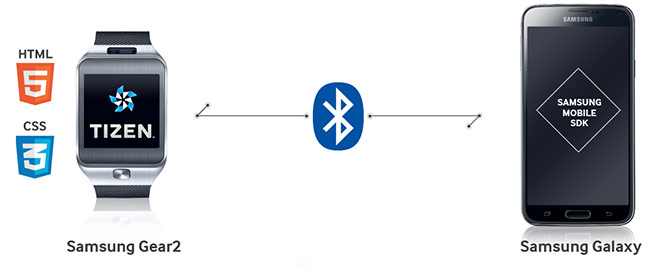
As its name suggests, Samsung wants developers to create great apps for its Gear 2 and Gear 2 Neo smartwatches. In return, the company is ready to give away $1.25 million in cash and goodies for the best ideas and developers!

The Gear App Challenge kicks off May 8 and registering is simple. The company hasn’t announced much more details beyond this, but it’s expected to do so in the coming week or so.

If you know your way around an .html and .css file, head over to the source link below to give the Samsung Gear Dev Tool and the available SDKs a go.