Showing posts with label Watches. Show all posts

Tuesday, May 27, 2014

The Operating System


About the Operating System
The Operating system is a fundamental software of a computer, controlling all basic operations of the computer  The Operating System is the base on which the user installs and executes third-party applications (commonly called apps for short) usually adding extended functionality to the device.
Among the most popular computer operating systems are Microsoft's Windows and Windows Phone and Apple's Mac OS and iOS, Google's Android and Chrome OS and the various distributions of Linux kernal.


Among the most popular OS's for mobile devices are Apple's iOS and Google's Android and they are the only ones that still show growth. Down the ranks there are RIM's BlackBerry OS and Microsoft's Windows Phone. Symbian holds a distant place, when merely 5 years ago it was still the most widely used mobile OS.
Symbian held its top position for years but its market share has been slowly fading away ever since touch-operated smartphones became the norm and Symbian failed to deliver an intuitive touch UI. Almost ten years ago, Microsoft's Windows Mobile was a strong player too, offering the first touchscreen smartphone experience with the PocketPCs powered by their OS.
Today mobile devices with a proper OS are called smartphones and users have a wide choice of applications, such as games, productivity apps, communication or social media apps, digital maps, etc.
Standardized operating system platforms make it possible to provide a consistent user interface (and experience) across devices from different hardware manufacturers. Yet, Android smartphone manufacturers like to customize the user experience so each offers a slightly modified version of the stock Android UI.
While the major players these days are clear, over the years we've seen the emergence of numerous mobile OS projects including but not limited to LG's webOS, Tizen, BlackBerry's Playbook OS and more recently, the Jolla's Sailfish OS and Mozilla's Firefox OS.

Choosing the right operating system
Choosing the right OS is very important. It will decide the way you use your smartphone.

 1. Now, if you're the one who will walk into the store, buy a smartphone and use what's provided out of the box, Apple's iOS will suit you. iOS gained popularity for its simple and elegant user interface. The home screen (as simple as it can get) is a grid of horizontally scrollable app icons with a dock in the bottom to pin your frequently used apps. Also, if you own a Mac or you use iTunes, iOS will be perfect for you.
2. But, on the other hand, if you're the person who wants to personalize your phone to the fullest, have access to the widest range of applications or maybe you want a mobile device for development purposes, Google's Android will suit you. It offers customization that is second to none! It offers you with the widest range of devices with the most powerful hardware you can think of. It also gives importance to the user's choice. Don't like the way your homescreen looks? No problem! Just download a replacement from the Google Play Store. And it's not only about the home screen! It's about almost everything in the system software! Also, if you are a heavy Gmail user, your business uses Google Apps, you're into YouTube(ing) or you prefer Google Play Music/Movies/Newsstand/Keep, go for Android..... you won't regret it.


3. If you are more of the Microsoft guy, with your work email on Microsoft Exchange or you want stellar productivity of Microsoft Office on the go or if you simply love Microsoft's Modern User Interface, go for Microsoft Windows Phone. It's the most elegant & fluid operating system. Sporting a homescreen of vertically scrollable Live Tiles which are simply boxy icons which dynamically update on the go to provide you with live information. 

This is the second installation in the Inside your smartphone series. The first part about the Processor is right here.


Friday, April 25, 2014

TechNow: Nokia-Microsoft deal now officially done... Nokia now Microsoft Mobiles


It's done – Nokia has just announced the completion of the sale to Microsoft of "substantially" all of its Devices & Services business to Microsoft. "Substantially" since two factories were excluded from the deal – the Chennai factory in India, but also the Masan factory in South Korea.

The deal underwent other changes too – the final price is expected to be slightly higher than the initially announced €5.44 billion due to a positive adjustment in net working capital and cash earnings. The leadership team that led Devices & Services at Nokia has stepped down and is moving to Microsoft effective today. This includes former CEO Stephen Elop, Jo Harlow, Juha Putkiranta, Timo Toikkanen and Chis Weber.

Nokia will make another announcement on April 29 (next Tuesday) to provide further details of the transaction (presumably the fate of the Chennai factory and the final sales price).

You can read Stephen Elop's open letter here. On Monday, Elop will be answering questions at the Nokia Conversations blog.

Let's play the iconic Nokia Tune one more time as we close this large chapter in mobile history.

Source

UPDATE:
Images from Harri Kiljander (Director of F-Secure Lokki) show what appears to be Nokia House in Finland with a crane truck up front, preparing to take down Nokia’s logo and another photo showing the S and F from Microsoft’s logo, reportedly being prepared for mounting. The “On The Move” sign under the Nokia logo adds an air of irony to the otherwise saddening image.

In the aftermath of the deal Microsoft will acquire around 32 thousand employees (around 4 thousand of which in Finland and around 18 thousand directly connected to manufacturing), a 10-year non-exclusive license of Nokia’s patent portfolio and a robust devices business while Nokia walks away with the ripe sum of €5.44 billion.

Hopefully Microsoft, as biggest manufacturer of Windows Phones starting today, will not let down the millions of Nokia owners and fans and will continue to innovate as Nokia did.

Source

TechNow: Apple going to make the iWatch with Nike?


Apple has a long relationship with Nike involving fitness tracking accessories and iPhones have carried the Nike+ app out of box before. According to said sources Apple and Nike will be making the iWatch with focus on tracking more than just fitness but also the user’s constant movement.

Nike recently fired the majority of the team working on its FuelBand product and will likely stop making it. In light of this the company is said to focus it’s fitness-tracking efforts into software, thinking of ways to expand its Nike+ suite and releasing a public API for developers. Apple is reportedly aiming to incorporate that same API into its iWatch for which the company allegedly recently secured the trademark through another firm. Furthermore Apple’s CEO Tim Cook has been seen wearing Nike’s FuelBand and has being sitting on Nike’s board for almost a decade now – strong corporate ties that add credibility to the rumors.

But Apple’s smartband device will do more than just follow your fitness routines. According to the sources it will be able to make electronic payments using an iBeacon technology or possibly the AirDrop Wi-Fi-enabled sharing method introduced with iOS 7. Additionally the smartwatch will be able to use Apple services like CarPlay.

The iWatch is expected to arrive in Q3 of this year. Another theory could be that Apple will release a smartwatch and smartband, similarly to competitors like Samsung.

Source

Thursday, April 24, 2014

TechNow: Android passes iOS in ad traffic, still behind in ad revenue

Highlights
The latest data from Opera’s Mediaworks ad tracking platform shows that Android has for the first time surpassed iOS in number of mobile ad impressions.

Apple’s iPhones and iPads still generate more ad revenue, however, receiving 52% of ad revenue, despite accounting for just 38.2% of all impressions.

Highlights
Click to enlarge
Android has been gradually climbing in both ad revenue and traffic over the past several years, largely at the expense of BlackBerry and Symbian. Google’s OS rose more than six points compared to this time last year, and now controls 33.5% of global ad revenue. This is in large part thanks to the sheer number of devices running Android, which now account for almost 80% of all smartphones by the latest IDC figures.

Samsung continues to solidify its position as the top vendor of of Android devices, accounting for some 60% of all mobile ad impressions in the first quarter of this year. Mobile ads are driven primarily by the US market, which accounts for over 50% of all ad traffic. The Asia-Pacific region comes in second with almost 23% thanks to emerging markets like China, while Europe accounts for just 13%.
Source
Highlights
Highlights

TechNow: Apple going to discontinue the iPod Nano to make space for the iWatch


Even though Apple’s consumer appeal was born with the iPod more than a decade ago, we have seen how the company has taken different steps into cannibalizing the line-up through the iPhone in a way to avoid having competition do it for them. Apple’s Tim Cook stated in the past quarter results call that the iPod line-up is a declining business as it’s currently nailing less than $5 billion in 2013 compared to much better results in previous years. If you’re wondering what will happen to the iPod in the future, financial analysts have already begun to do the same.

Financial analysts are already doing all sorts of predictions regarding the future of the iPod, and one of these is that Apple won’t revamp the line-up this year once again. The current iPod line-up was launched at the end of 2012, and it seems that Apple plans to keep it that way during the launch of the iWatch. We most likely won’t see Apple kill the iPod initially, and will most probably wait for the iWatch to gain traction before killing the music player, mainly because Apple has production targets for the iWatch of only 5-6 million units.

The touch part of these rumours is seeing Apple replacing a $50 iPod Shuffle with an iWatch that’s rumoured to cost a lot of money. Whatever the case may be, let’s hope Apple also gives us a Mickey Mouse iWatch, as we saw it do with the previous design of the iPod nano.

Check out the other iWatch and other wearable tech news right here on TheEverythingNow's TechNow. 

Source

Wednesday, April 23, 2014

TechNow: Samsung Gear Fit sells out


If you’re looking to pick up a fitness tracker, you probably have more options than you know what to do with: Fitbit, Jawbone, Nike, or even a general-purpose smartwatch like Pebble. This year, we saw Samsung introduce a couple new models to its Gear family, including the Gear Fit, a stripped-down wearable that sort of bridged the gap between display-less trackers and more flexible smartwatches. We weren’t sure if the band’s $200 price tag might scare a lot of shoppers away, either driving them to more affordable or more full-featured offerings. Now early reports of sales are in, and it looks like Samsung actually has a win on its hands, selling out of its initial Gear Fit stock.
While the 200K to 250K Gear Fit models that have reportedly been sold already aren’t quite smartphone-level numbers, the fact that Samsung was able to move so many wearables in a scant ten days is solidly impressive on its own accord.
That said, we wonder how many of these purchases were made alongside a new Galaxy S5 phone. It’s going to be a lot easier to convince a shopper already paying many hundreds of dollars for a new phone to cough up just a little more to flesh-out the experience they’ll get with the addition of a wearable, compared to convincing customers who may already own an older Samsung model to invest in this new technology. Source

TechNow: Apple using fake company to trademark the name iWatch


The amount of rumors surrounding the iWatch have grown dramatically in the last couple of weeks, but the fact that we’ve decided to call it iWatch doesn’t necessarily mean this will be the name for the product. Many speculated over the final name of the iPad for years, and we heard names like iSlate, iTab, and in the end, Apple surprised us with iPad. We could be surprised with the iWatch as well, but new official documentation reveals that we probably won’t.

Apple’s secrecy is not as legendary as it was years ago, but it seems that the Cupertino is using a fake company by the name of Brightflash to register the iWatch trademark in various countries. This is not new, as the company did the same with a fake company to register the iPad trademark, and Brightflash shares the same shipping address to this company. The same also happened with “Carplay Enterprises” in order to trademark CarPlay a couple of weeks ago.

We could say this guarantees that we’ll see the iWatch using that name, but Apple has also been famous for owning a ton of trademark names that are currently not in use, and are simply similar to the current products that it does own and use. Hopefully we’ll see more about this iWatch in the next coming weeks.

TechNow: Google Play Store having a Premium Game Sale


If you haven’t scratch your “good deal” itch with Steam Sales, Google is holding a Premium Game Sale. The sale features paid games exclusively, ranging for casual to highly advanced. This includes Anomaly 2 (down to just $0.99), The Dark Knight Rises, Need for Speed: Most Wanted and so on. Note that the available games and the list their price varies by region. Regardless of where you are, this link will take you to Google Play Store’s Spring Sale.

TechNow: Samsung looking to get app developers interested in the newest Gear smartwatches

Samsung is kicking its series of Smart App Challenges with a smartwatch-centric one called the Gear App Challenge.


As its name suggests, Samsung wants developers to create great apps for its Gear 2 and Gear 2 Neo smartwatches. In return, the company is ready to give away $1.25 million in cash and goodies for the best ideas and developers!

The Gear App Challenge kicks off May 8 and registering is simple. The company hasn’t announced much more details beyond this, but it’s expected to do so in the coming week or so.

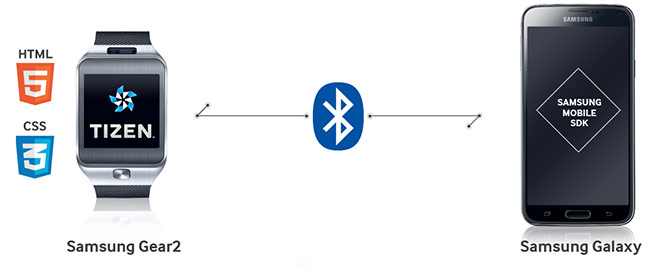
If you know your way around an .html and .css file, head over to the source link below to give the Samsung Gear Dev Tool and the available SDKs a go.